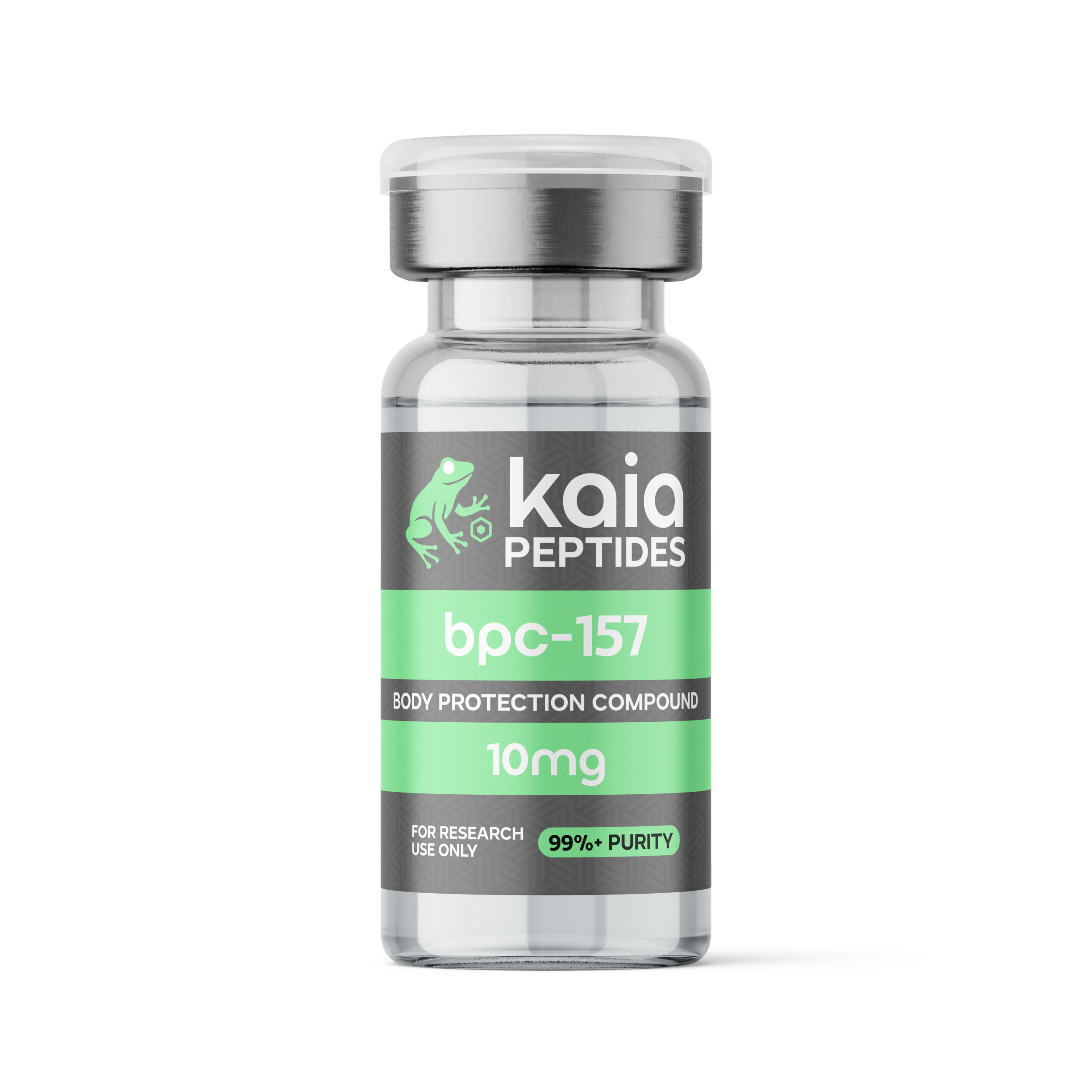
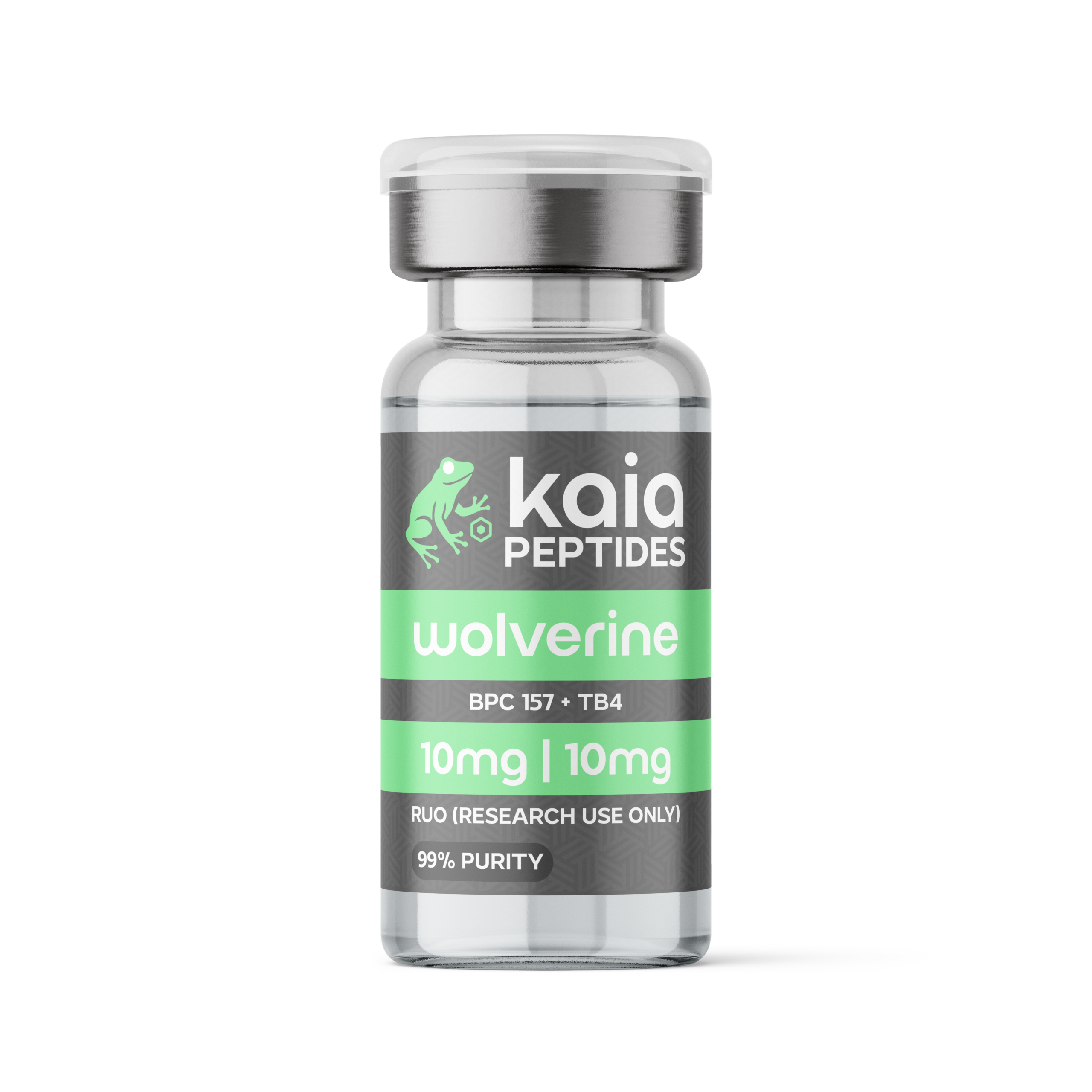
Wolverine - BPC-157 (10mg) + TB4 (10mg)
Dual Peptide Research Blend – Tissue-Model Response, Pathway Interaction & Regeneration Studies
For laboratory research use only. Not for human or animal use. These products have not been evaluated by the U.S. Food and Drug Administration (FDA) and are not intended to diagnose, treat, cure, or prevent any disease.
What Is Wolverine?
This blend contains two laboratory-researched peptides frequently studied for their roles in cellular, structural, and tissue-model signaling environments.
• BPC-157 (10mg)
A synthetic pentadecapeptide commonly examined in controlled research settings for its interaction with:
-
Angiogenesis-related pathways
-
Cellular migration models
-
Structural integrity and tissue-response behavior
-
Inflammatory-signal modulation patterns
• TB4 (10mg)
A research fragment of Thymosin Beta-4 often used in scientific studies to explore:
-
Actin-binding mechanisms
-
Cell-migration and repair-model dynamics
-
Vascular and circulatory pathway behavior
-
System-wide response patterns in experimental environments
When studied together, researchers can observe how localized and systemic signaling models interact across multiple layers of a controlled test environment.
Understanding BPC-157 + TB4 — A Metaphorical Research Analogy
To help visualize this blend from a scientific-model perspective, imagine a complex transportation network used in research to symbolize structural systems.
Over time, this model network may exhibit:
-
Micro-fractures
-
Congestion points
-
Reduced flow through critical pathways
-
Slower structural response mechanisms
Researchers often use analogies like these to conceptualize how different signals behave in controlled experiments.
• BPC-157: The Precision Signal Engineer
In a laboratory analogy, BPC-157 acts like a targeted “repair cue,” allowing researchers to observe:
-
Localized signaling
-
Specific response sites
-
Structural pathway activation
-
Angiogenesis-related model activity
-
Modulation of simulated “traffic buildup” (inflammation models)
It is studied for how selectively and precisely signals propagate in localized environments.
• TB4: The System-Wide Flow Modulator
TB4 is often used in research to test broader, system-wide behaviors such as:
-
Cell transport and migration efficiency
-
Flow improvements across larger model networks
-
Actin-based structural response
-
Distributed signaling through extended pathways
If BPC represents local “repair signals,” TB4 represents the broader “infrastructure flow” that researchers observe across entire systems.
Together in Research Models
When paired, these peptides allow researchers to explore how:
-
Local vs. system-wide pathways interact
-
Signal propagation changes under different conditions
-
Structural models respond to dual-pathway stimulation
-
Angiogenesis, migration, and response cycles align
-
Network resilience shifts in controlled experiments
This dual-peptide setup gives laboratories a broader multi-pathway framework for studying coordinated tissue-model behaviors.
For Research Use Only.
Not for human consumption. Not for medical or veterinary use.
All descriptions are for scientific, educational, and laboratory reference only.