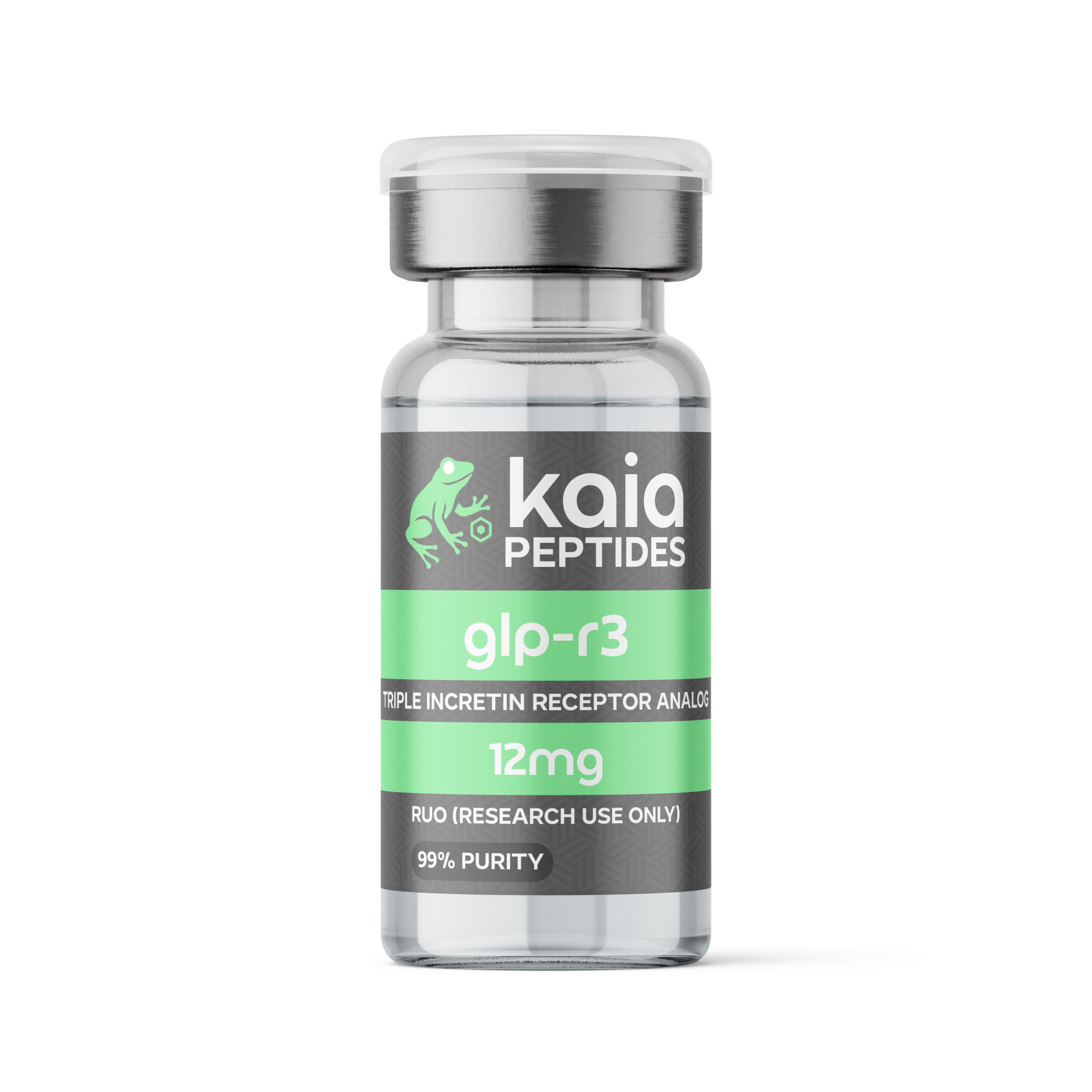
GLP-R3 (12mg) -
Triple-Agonist Research Peptide – Multi-Receptor Metabolic Pathway Modeling & Energy-Signal Studies
What Is Retatrutide?
Retatrutide is a next-generation triple-agonist peptide used in advanced metabolic research.
It is studied for its ability to simultaneously activate:
-
GLP-1 receptors
-
GIP receptors
-
Glucagon receptors
This combination allows researchers to explore three interconnected metabolic pathways at once, providing a broader model for studying:
-
Appetite-related signaling
-
Energy-balance mechanisms
-
Glucose-regulation pathways
-
Lipid-metabolism models
-
Multi-receptor synergy in metabolic research
Because it engages three signaling systems instead of one, Retatrutide offers a highly versatile platform for examining complex metabolic behavior in controlled laboratory environments.
Understanding Retatrutide — A Metaphorical Research Analogy
Imagine a high-tech railway system used as a symbolic model of metabolic function.
This “train” represents an experimental metabolism system deciding:
-
How fuel (nutrients) moves
-
How signals regulate intake
-
How engines handle energy
-
How efficiently pathways communicate
-
How storage vs. utilization is balanced
In disrupted research models, the train may struggle with:
-
Faulty signals
-
Slow engines
-
Overloaded cargo
-
Inefficient fuel use
-
Reduced system responsiveness
Most metabolic-pathway agonists act like sending one engineer to help.
Retatrutide sends three.
Each specializes in a different signaling role.
Engineer #1 — The Signal Controller (GLP-1 Pathway Research)
The GLP-1–related component of Retatrutide is studied for:
-
Appetite-signaling pathways
-
Satiety-related neural circuits
-
Digestive-rate coordination
-
Hunger-cue modulation
In the railway analogy, this engineer repairs key signaling lights and switches so the system stops overloading with incoming fuel.
Engineer #2 — The Fuel Manager (GIP Pathway Research)
The GIP-related activity allows researchers to examine:
-
Insulin-signaling pathways
-
Fuel-utilization efficiency
-
Nutrient-processing behavior
-
Glucose-response mechanisms
In the metaphor, this engineer optimizes how fuel is handled after it arrives.
Engineer #3 — The Engine Modulator (Glucagon Pathway Research)
The glucagon-receptor component is used to study:
-
Energy-expenditure pathways
-
Lipid-mobilization models
-
Metabolic-activation signals
-
Fuel-burning mechanisms
This engineer goes directly to the engine room, adjusting power output and overall efficiency.
The Result: A Fully Coordinated Metabolic Railway (In Research Models)
With all three pathways engaged, researchers can explore:
-
Reduced signaling load in appetite models
-
Improved coordination of nutrient-handling systems
-
Enhanced mobilization of stored energy
-
Increased activation of metabolic pathways
-
Better synchronization across GLP-1, GIP, and glucagon networks
This railway analogy allows a clear visualization of triple-pathway receptor activation without implying any therapeutic or human outcome.
Combined Research Perspective
Retatrutide is valuable in studies involving:
-
Multi-hormone receptor interactions
-
Complex metabolic-pathway modeling
-
Fuel-handling and energy-output signals
-
Appetite-signaling cascades
-
Glucose-regulation frameworks
-
Lipid-metabolism dynamics
Scientists use this triple-agonist model to understand how overlapping receptors coordinate metabolic behavior in controlled environments.
For Research Use Only.

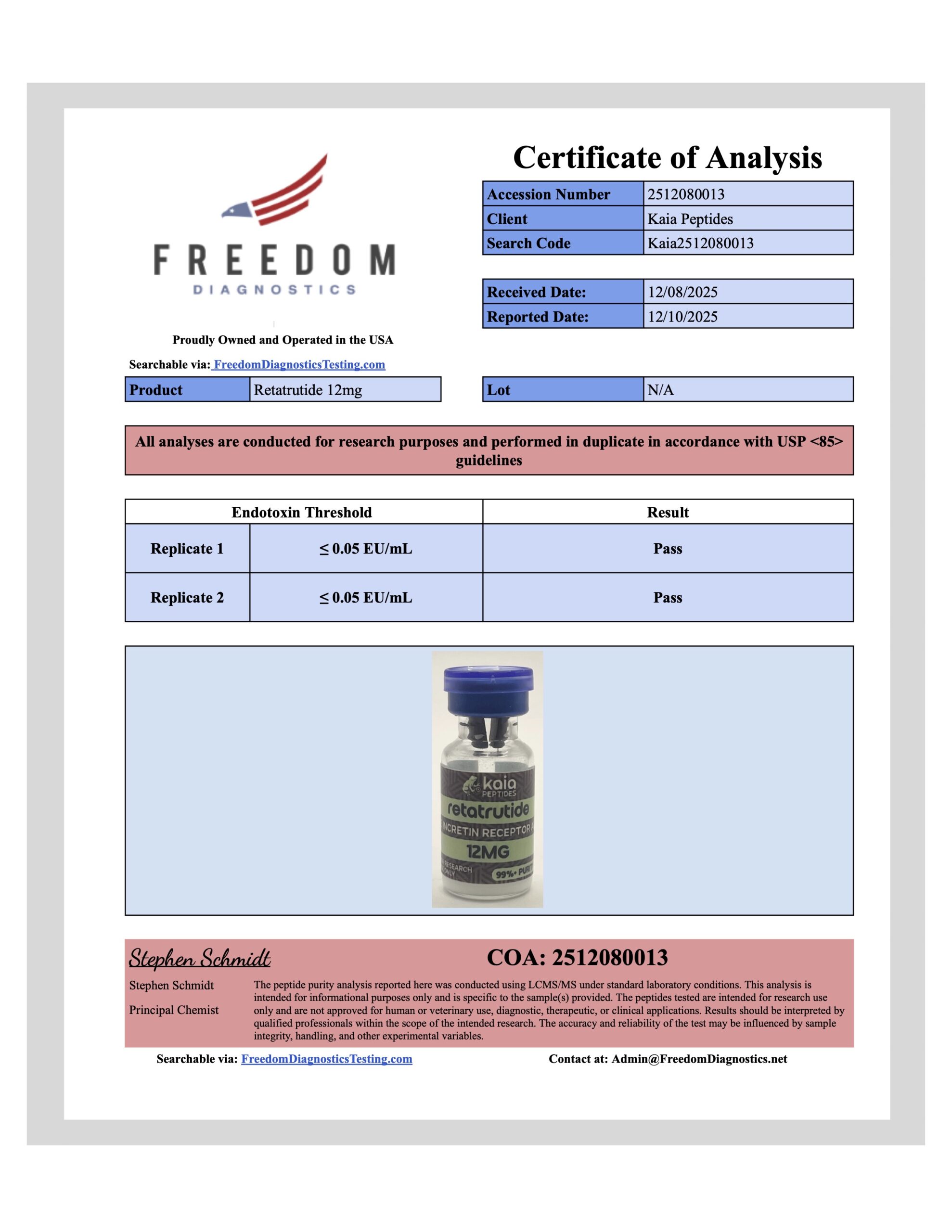
For laboratory research use only. Not for human or animal use. These products have not been evaluated by the U.S. Food and Drug Administration (FDA) and are not intended to diagnose, treat, cure, or prevent any disease.