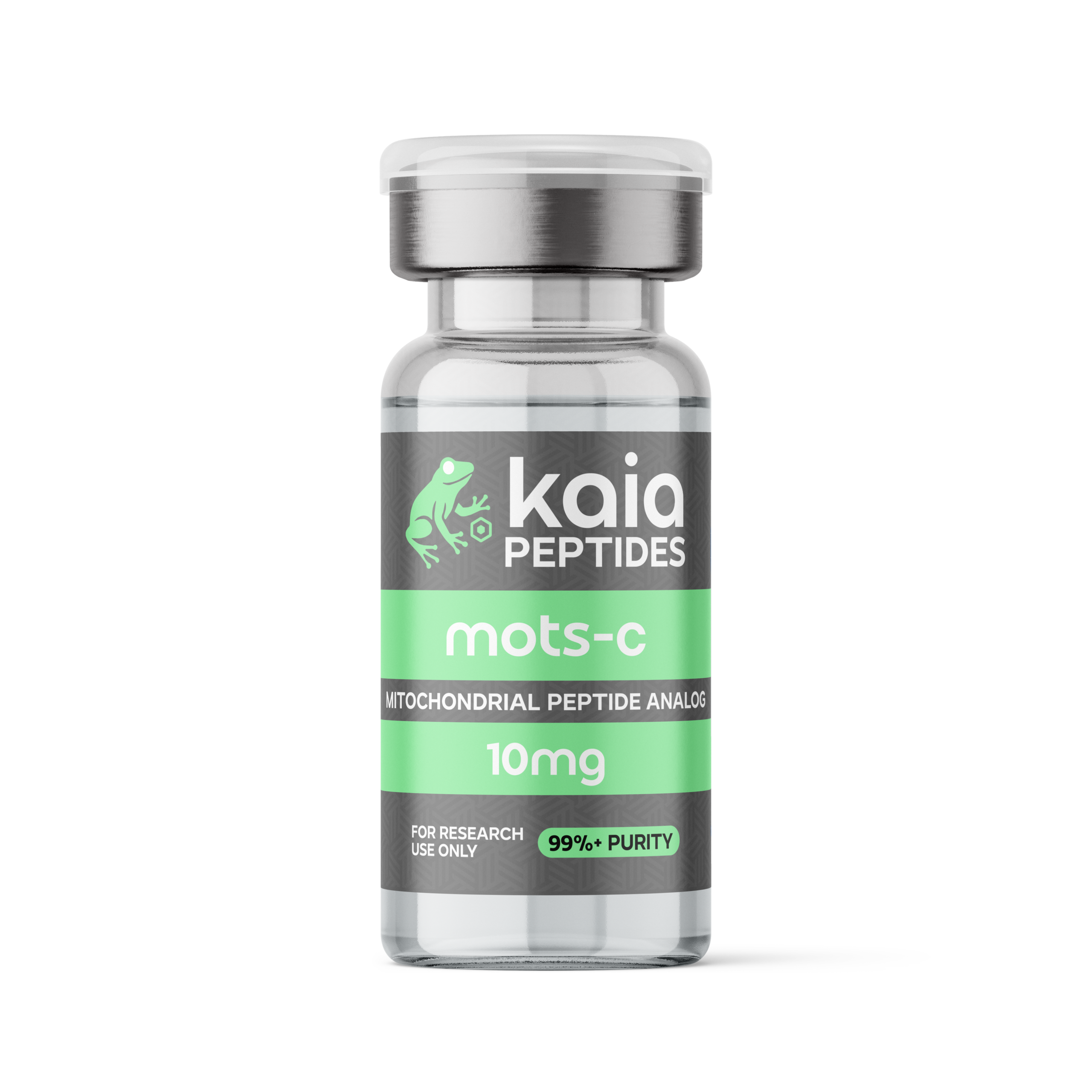
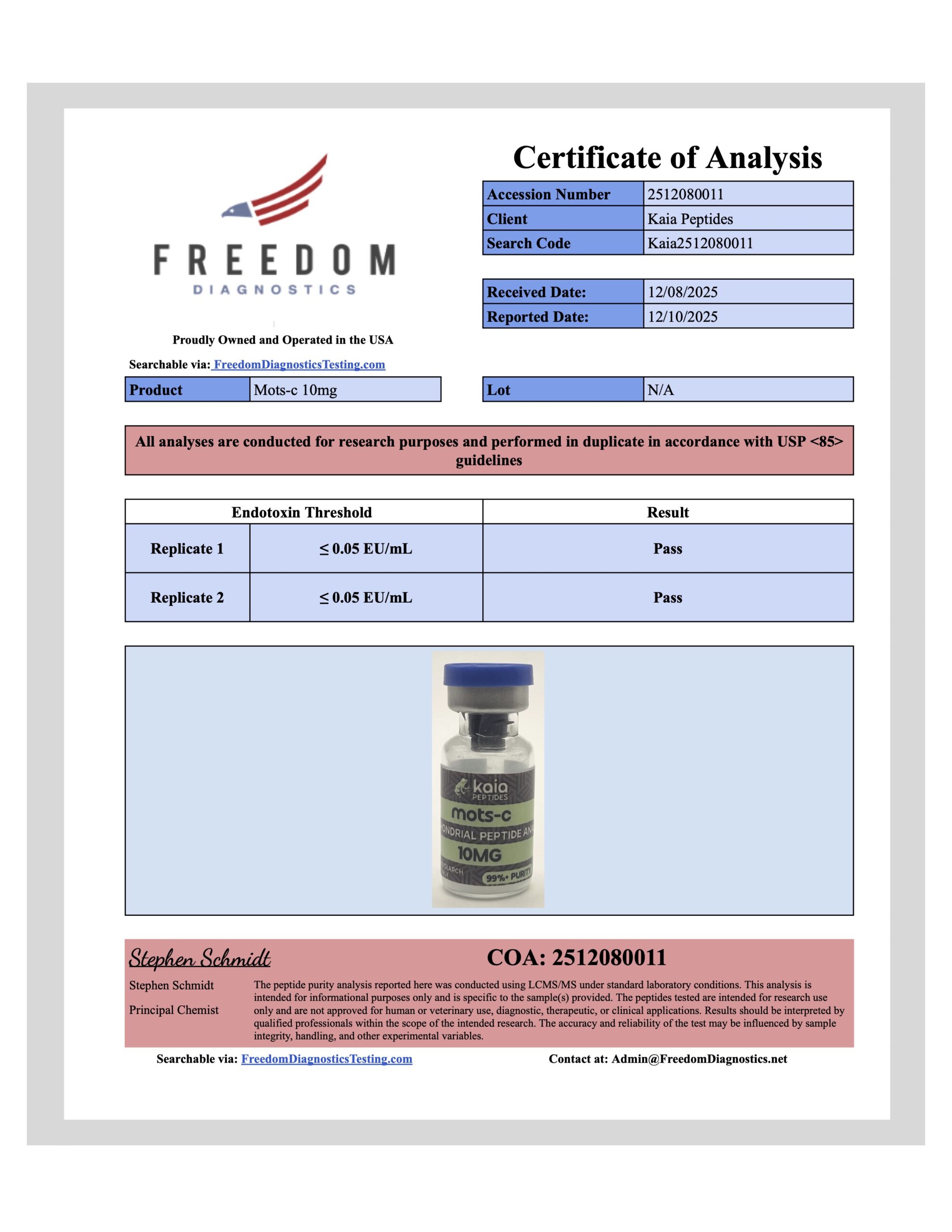
MOTS-C (10mg)
Mitochondrial-Derived Research Peptide – AMPK Pathway Modeling, Metabolic-Signal Studies & Cellular-Stress Response Research
What Is MOTS-C?
MOTS-C is a naturally occurring peptide encoded within mitochondrial DNA, making it part of a rare class of mitochondria-derived peptides.
In scientific and laboratory environments, MOTS-C is widely used to study:
-
AMPK-related energy-regulation pathways
-
Cellular metabolic flexibility
-
Mitochondrial-function models
-
Glucose-utilization signaling
-
Stress-adaptation mechanisms
-
Energy-balance behavior in controlled systems
Researchers frequently examine how MOTS-C participates in the coordination between mitochondrial activity, cellular energy demands, and stress-response signals.
Understanding MOTS-C — A Metaphorical Research Analogy
Imagine a city used to symbolize biological systems.
Each cell is a house.
Each house contains a power plant in the basement — the mitochondrion — responsible for keeping the lights on and systems running.
In certain experimental environments, the city experiences challenges:
-
Flickering lights during stress (unstable energy output)
-
Power plants low on fuel (reduced mitochondrial activity)
-
Workers becoming inefficient (metabolic fatigue)
-
Streets clogged with “traffic” (poor fuel utilization)
-
Neighborhoods falling behind (low adaptive capacity)
MOTS-C acts like a specialized emergency worker living inside these power plants — emerging when the city enters a low-energy or stress state.
• Turning on Backup Generators (AMPK Pathway Research)
One of the primary research interests for MOTS-C is its relationship with AMPK activation, a major metabolic-regulation pathway.
AMPK acts as a master switch that governs energy balance.
In the metaphor, MOTS-C flips the emergency breaker:
“Energy is low — activate alternative pathways.”
Researchers study:
-
AMPK-signaling dynamics
-
Fuel-switching mechanisms
-
Metabolic-stress adaptation
• Clearing the Streets (Glucose-Utilization Models)
Studies often evaluate MOTS-C for how it interacts with:
-
Glucose-handling pathways
-
Fuel-uptake mechanisms
-
Metabolic-flow efficiency
In the city analogy, metabolic “traffic jams” disappear.
• Delivering Fresh Supplies (Metabolic-Flexibility Studies)
MOTS-C is examined for:
-
Adaptive changes in fuel usage
-
Responses to nutrient availability
-
Shifts between glucose and lipid pathways
This is like ensuring each house receives the fuel it needs to stay illuminated.
• Motivating the Workers (Stress-Response Modeling)
Under metabolic or oxidative stress, researchers observe:
-
Enhanced cellular resilience
-
Improved adaptive signaling
-
Reduced stress-induced performance drops
This is equivalent to a motivated, coordinated workforce across the city.
• Strengthening the Power Plants (Mitochondrial-Function Research)
MOTS-C is studied for:
-
Mitochondrial support mechanisms
-
Energy-production efficiency
-
Repair and restoration signaling under strain
In the metaphor, the city’s power plants undergo real upgrades — not just temporary fixes.
Combined Research Perspective
Across multiple study types, MOTS-C allows researchers to explore:
-
AMPK-driven metabolic pathways
-
Glucose-utilization and fuel-switching models
-
Cellular-energy production
-
Stress-response and oxidative-load resilience
-
Mitochondrial efficiency and adaptation
-
Longevity-related signaling mechanisms
The city analogy makes these complex energy-regulation systems easier to visualize without implying any human therapeutic outcome.
For Research Use Only.
For laboratory research use only. Not for human or animal use. These products have not been evaluated by the U.S. Food and Drug Administration (FDA) and are not intended to diagnose, treat, cure, or prevent any disease.