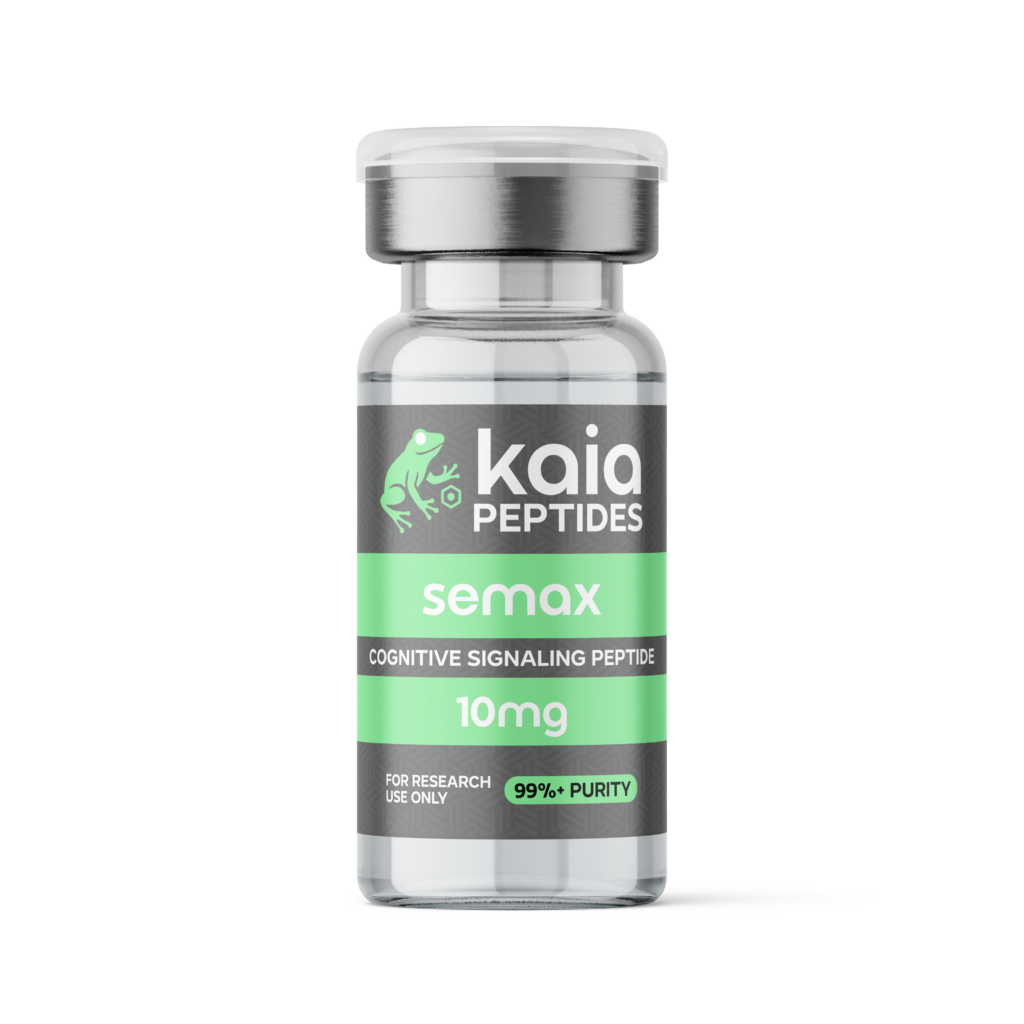
ACTH-Derived Research Peptide – Cognitive-Pathway Modeling, Neurochemical Studies & Stress-Response Research
Semax is a synthetic peptide derived from a short fragment of ACTH (adrenocorticotropic hormone) that does not exhibit hormonal activity.
It is widely used in scientific and laboratory research to study:
Cognitive-function signaling pathways
Memory-model formation
Neurochemical and neurotransmitter balance
BDNF-related signaling activity
Stress-response and adaptive-behavior models
Neuroprotective mechanisms in controlled environments
Researchers often evaluate Semax in models involving cognitive load, fatigue, environmental stress, and neuroplasticity-related pathways.
Imagine the brain in a research model as a vast, intricate library containing billions of books.
Each book symbolizes:
Stored information
Learned skills
Decision patterns
Memories and associations
In stressed or fatigued laboratory conditions, researchers sometimes observe:
Slowed sorting
Reduced organizational efficiency
Misplaced data
Lower processing speed
Inconsistent signaling
Now imagine a specialized librarian signal entering the system.
That signal represents Semax.
BDNF (brain-derived neurotrophic factor) is often compared to the electrical system of the “library.”
When lighting is bright, processes appear clearer and more efficient.
Semax is studied for:
Upregulating BDNF-related signaling
Supporting neuroplasticity models
Enhancing clarity within simulated cognitive frameworks
This is like illuminating the entire library so the staff works faster and with fewer errors.
Researchers evaluate Semax for how it influences:
Memory-encoding processes
Retrieval efficiency
Information-organization pathways
Stress-related disruptions to memory models
In the analogy, librarians correctly shelve and find books with greater accuracy.
Semax is used in experiments to observe:
Processing-speed changes
Attention-signaling pathways
Task-efficiency behavior under cognitive demand
The mental “conveyor belts” and sorting mechanisms run more smoothly in the symbolic library.
Under stress, the library becomes chaotic:
Books spill
Filing slows
Decision-making falters
Semax is studied for its interaction with:
Stress-regulation pathways
Mood-related neurochemical signaling
Adaptive responses under pressure
This brings order back to the research environment.
Some books in the library — symbolizing important or fragile neural structures — degrade more quickly under oxidative or stress-driven conditions.
Scientists study Semax for:
Neuroprotective markers
Oxidative-stress modulation
Preservation-related signaling pathways
This is like placing protective casings around the rarest volumes.
Researchers use Semax to explore:
Neuroplasticity and BDNF-driven pathways
Memory accuracy and retrieval models
Cognitive-speed and attention mechanisms
Stress-response balance
Neuroprotective processes
Adaptive signaling in brain models
The library analogy simplifies these pathways without implying any human therapeutic effect.
For Research Use Only.
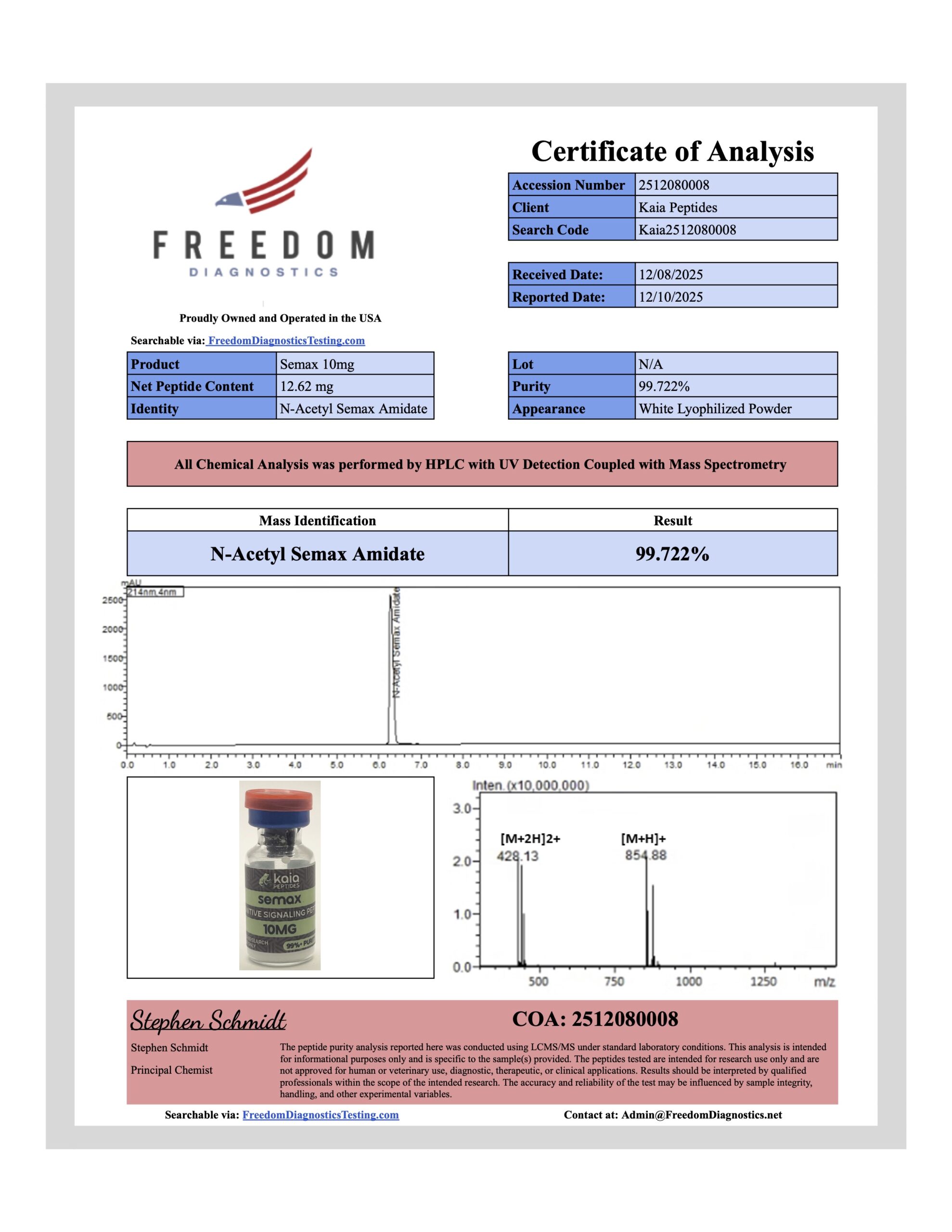
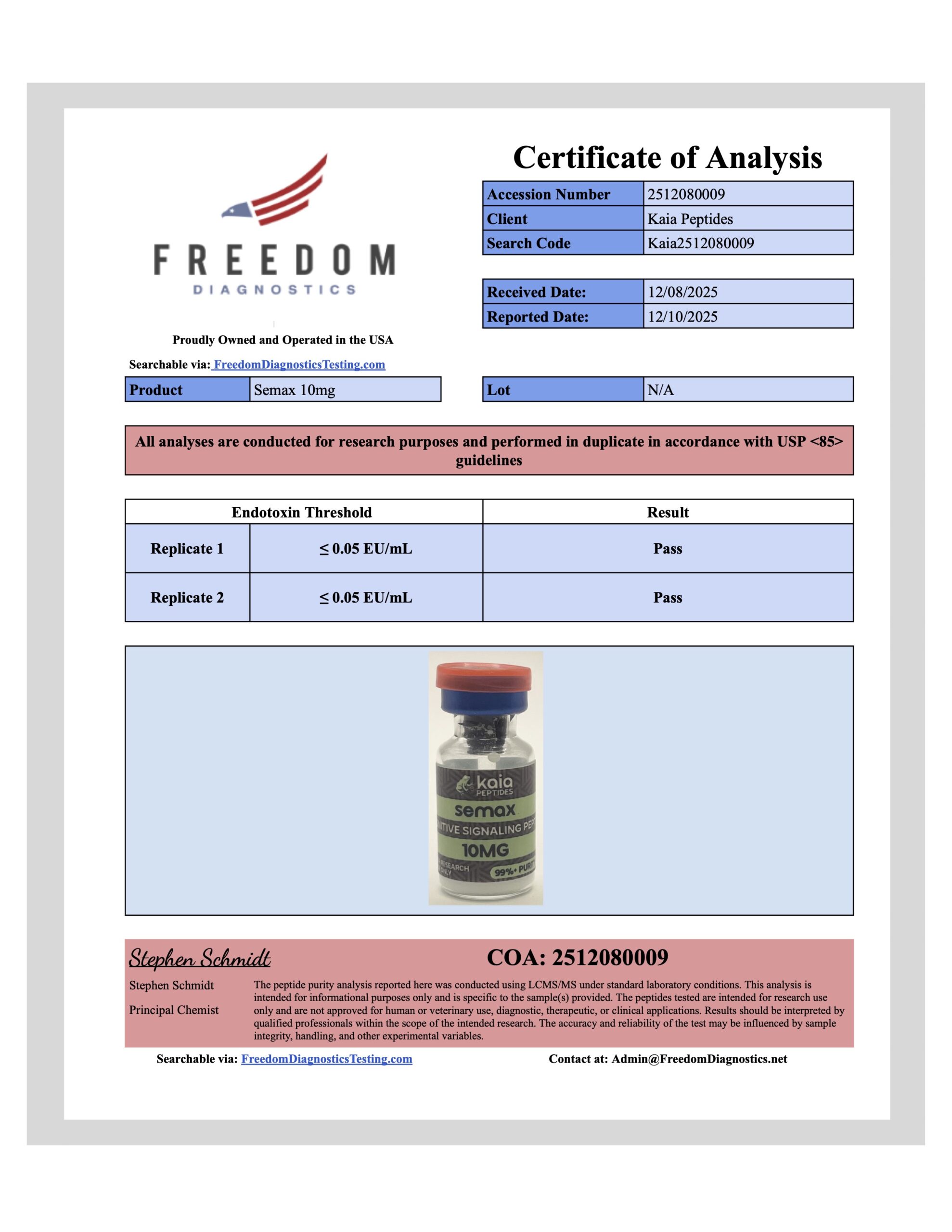
For laboratory research use only. Not for human or animal use. These products have not been evaluated by the U.S. Food and Drug Administration (FDA) and are not intended to diagnose, treat, cure, or prevent any disease.