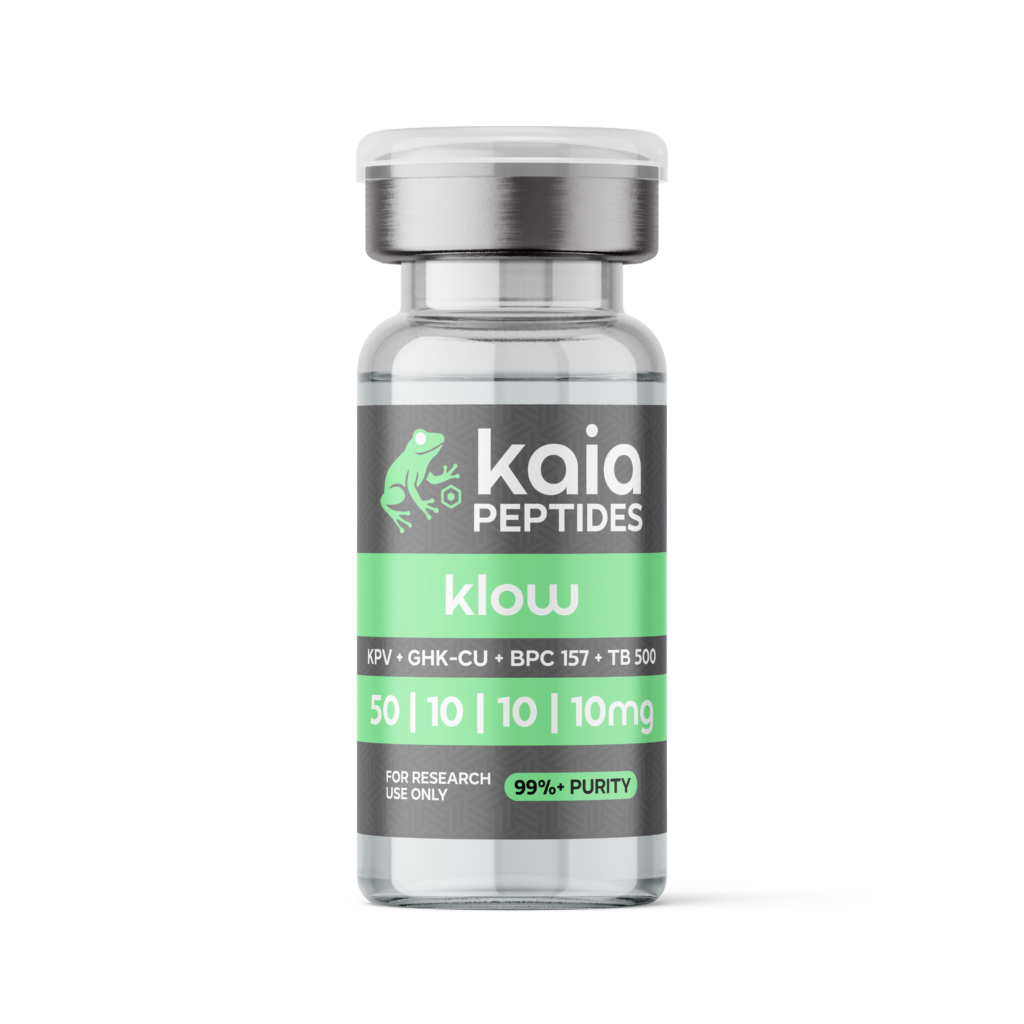
KLOW BLEND — 80mg
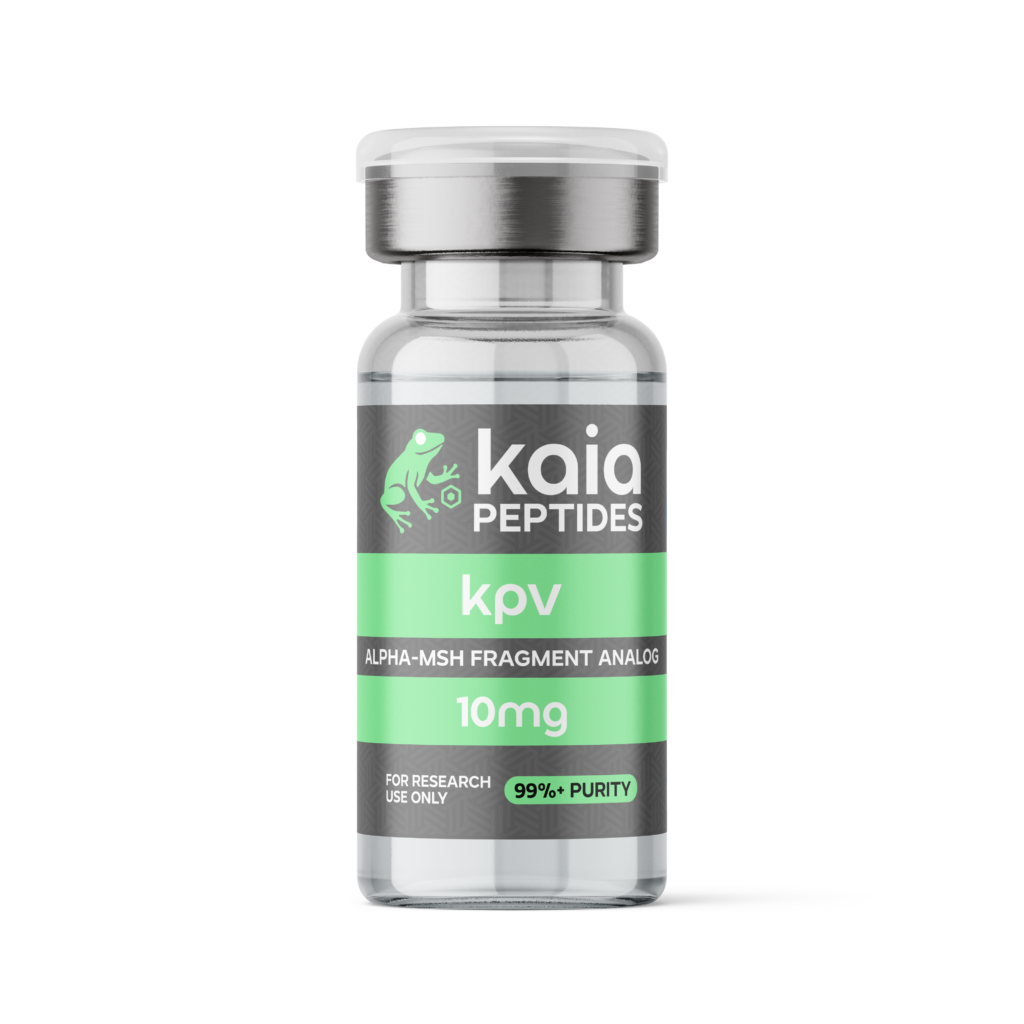
GHK-Cu 50mg / BPC-157 10mg / TB-4 (TB-500) 10mg / KPV 10mg
Quad-Peptide Research Blend – Multi-Layer Regeneration Modeling, Pathway Interaction & System-Wide Signal Studies
For laboratory research use only. Not for human or animal use. These products have not been evaluated by the U.S. Food and Drug Administration (FDA) and are not intended to diagnose, treat, cure, or prevent any disease.
What Is KLOW?
KLOW is a four-peptide blend designed for laboratory environments where researchers study complex, multi-pathway interactions across structural, inflammatory, regenerative, and extracellular matrix models.
• GHK-Cu (50mg)
A copper-binding tripeptide used in research to examine:
-
Collagen and ECM-related signaling
-
Skin-model rejuvenation pathways
-
Gene-expression modulation
-
Tissue-response behavior
• BPC-157 (10mg)
A synthetic pentadecapeptide studied for:
-
Angiogenesis-related signaling
-
Cellular migration behavior
-
Structural and connective-tissue response models
-
Inflammatory-pathway modulation
• TB-4 / TB-500 (10mg)
A research fragment of Thymosin Beta-4 used to analyze:
-
Actin-mediated cell movement
-
System-wide repair modeling
-
Flow and transport pathways
-
Broad tissue-response dynamics
• KPV (10mg)
A naturally occurring α-MSH fragment studied for:
Together, these compounds allow researchers to explore multi-layer regeneration models that no single peptide can demonstrate alone.
Understanding KLOW — A Metaphorical Research Analogy
To illustrate how KLOW behaves in a research framework, imagine a vast natural sanctuary — a symbolic ecosystem representing biological structures.
In this analogy:
-
Trees = tissues
-
Roots = connective systems
-
Soil = cellular foundation
-
Rivers = transport pathways
-
Wildfires = inflammatory events
-
Vegetation color = extracellular matrix and surface-level health
Over time, experimental stressors may introduce:
KLOW allows researchers to examine how four distinct signals influence these different aspects when acting together.
Caretaker #1 — GHK-Cu: The Artist of Renewal (Surface & ECM Models)
GHK-Cu represents the signal responsible for:
-
ECM remodeling studies
-
Collagen/elastin-related pathways
-
Surface-layer regeneration analogies
-
Gene-expression modulation research
In the sanctuary metaphor, it “restores color and structure” to the visible landscape.
Caretaker #2 — BPC-157: The Root Mechanic (Structural & Foundation Models)
BPC-157 is studied for:
In the analogy, it strengthens the “root networks” and foundational layers of the sanctuary.
Caretaker #3 — TB-4 / TB-500: The River Engineer (Flow & Migration Models)
TB-500 is frequently used to observe:
-
Cell-migration efficiency
-
Systemic-flow dynamics
-
Broad tissue-repair cascades
-
Transport-pathway improvements
In the sanctuary, it clears rivers, restores flow, and enhances system-wide movement.
Caretaker #4 — KPV: The Firefighter (Inflammatory-Signal Modulation)
KPV is often studied for:
-
Calming inflammatory cascades
-
Preventing propagation of inflammatory “sparks”
-
Supporting barrier-integrity models
-
Reducing activation intensity in sensitive regions
In the sanctuary, it extinguishes “wildfires” and stabilizes the overall environment.
Combined Research Perspective
Together, researchers use KLOW to observe how multiple pathways interact simultaneously:
-
ECM + structural + flow + inflammation models
-
Multi-signal regeneration behavior
-
Layered tissue-response frameworks
-
System-wide recovery simulations
-
Cooperative vs. independent peptide activity
The sanctuary metaphor helps simplify how each peptide contributes to a harmonious, multi-layer regenerative model within controlled experimental systems.
For Research Use Only.
Not for human consumption. Not for medical, therapeutic, or veterinary use.
Descriptions are for scientific, laboratory, and educational reference only.