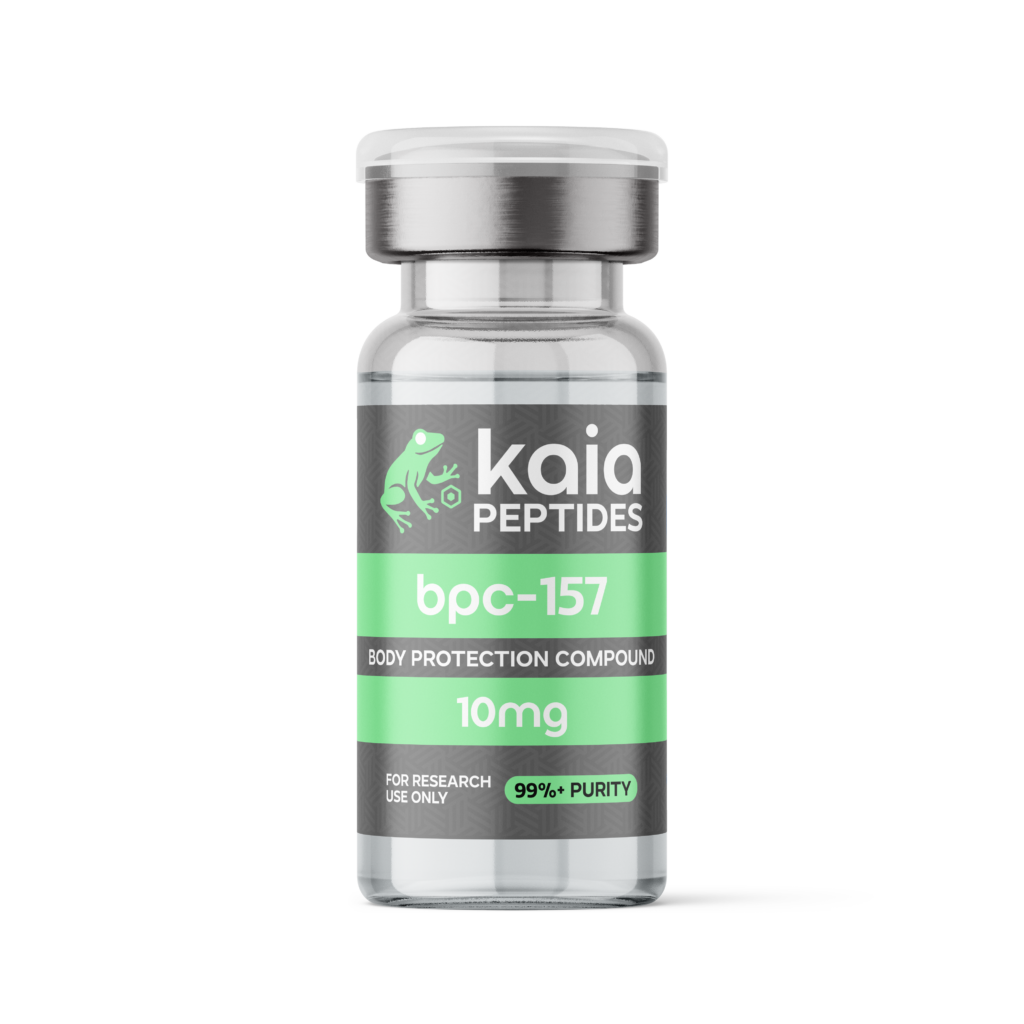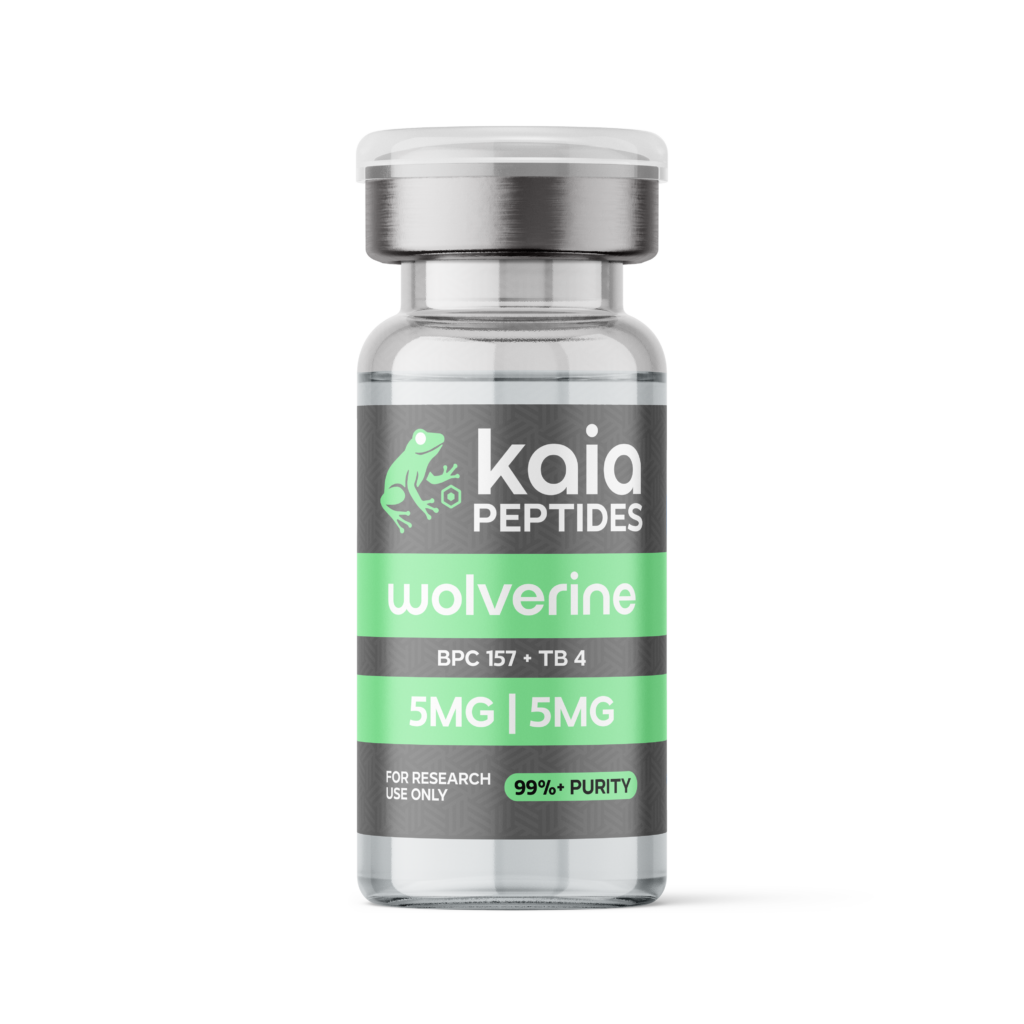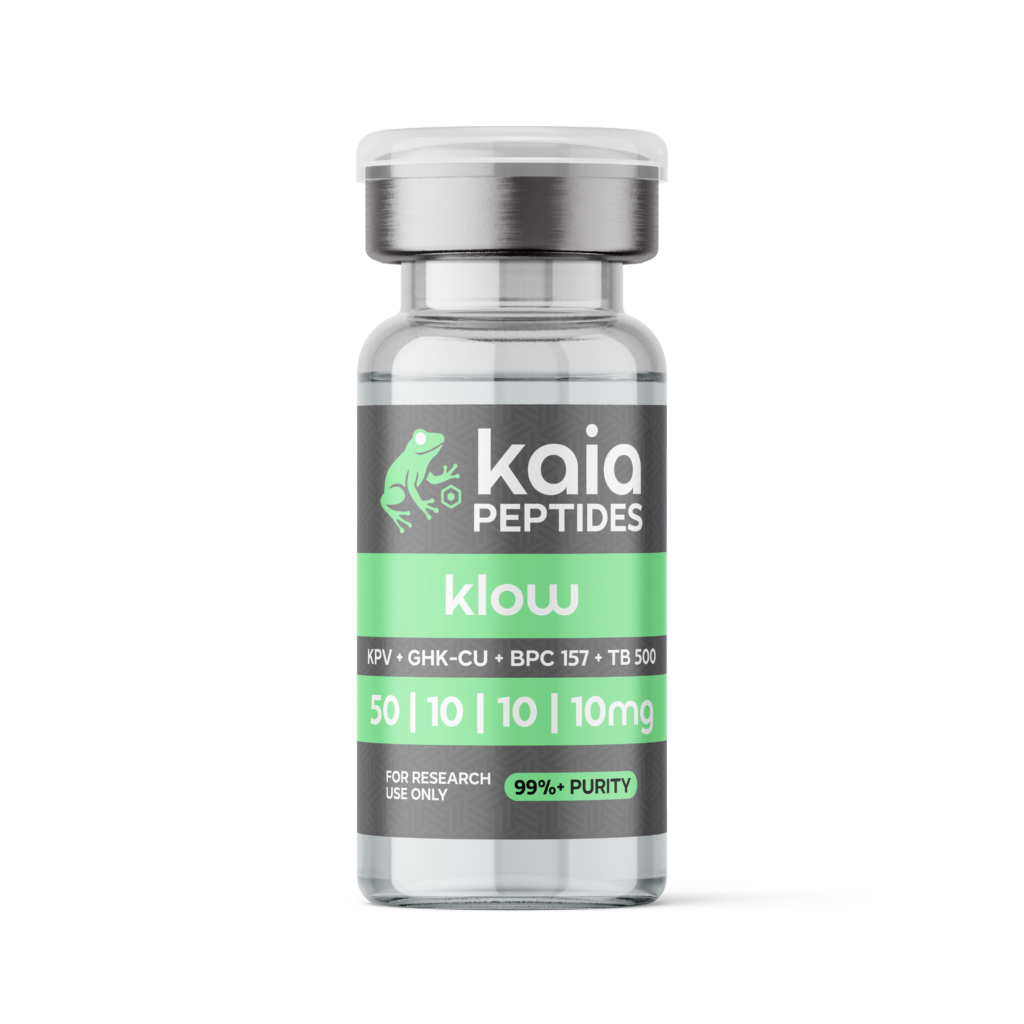
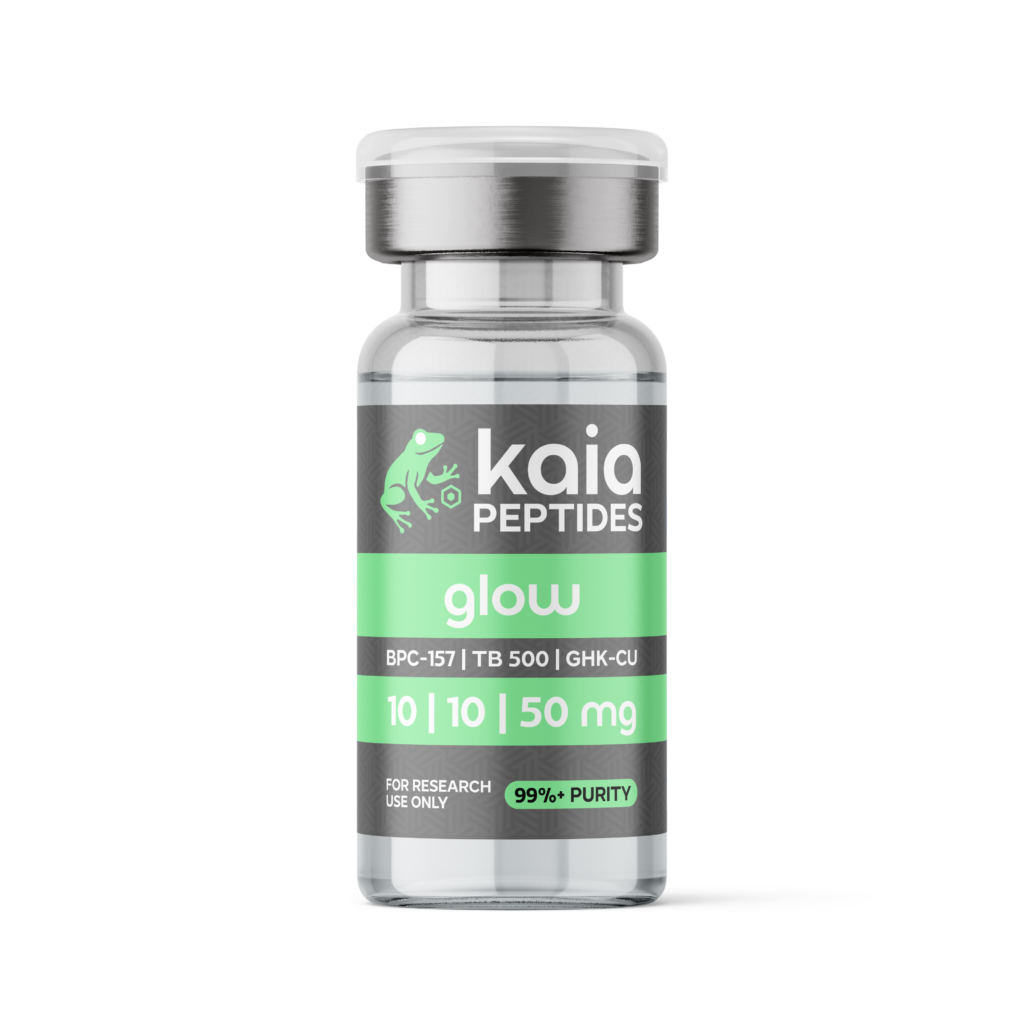
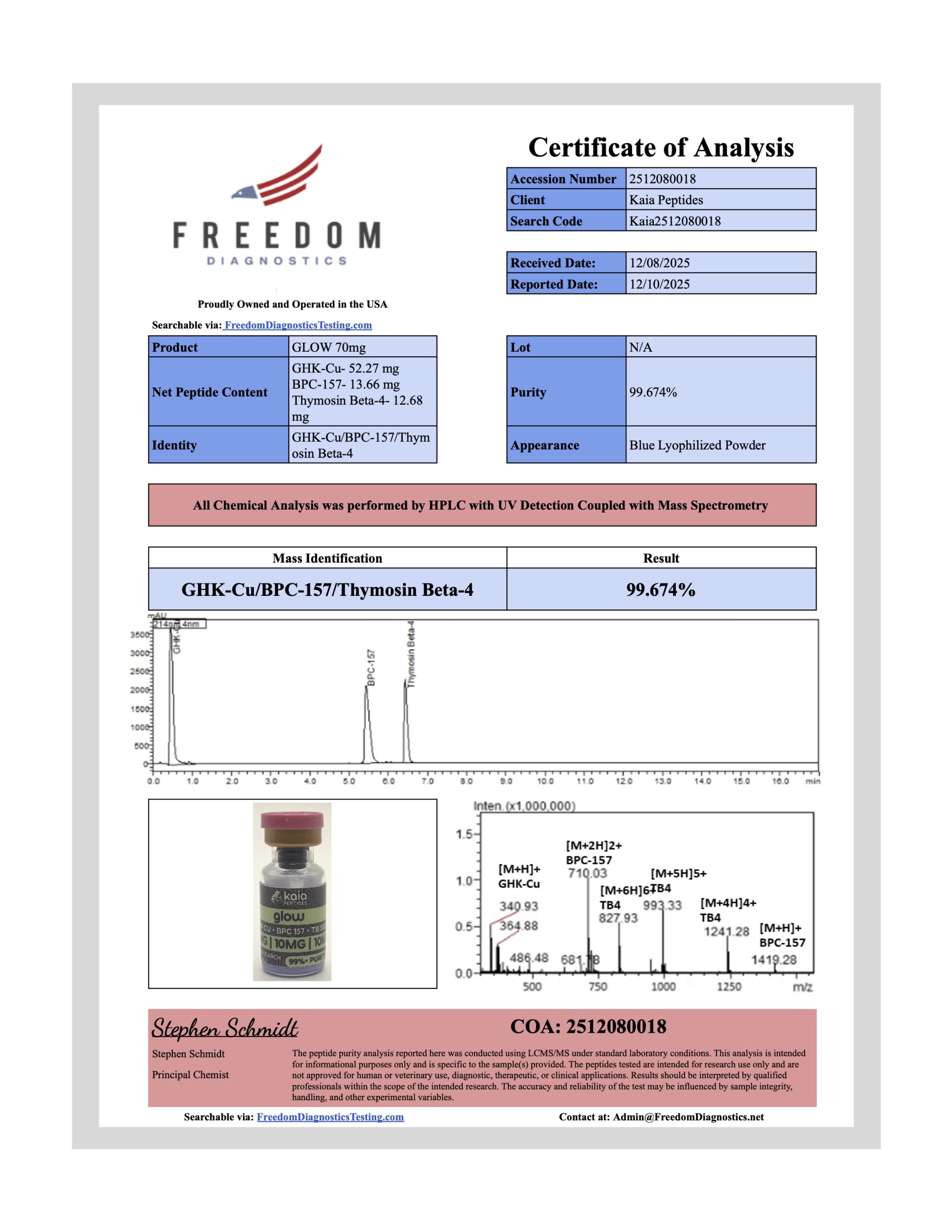
BPC-157 (10mg) + GHK-Cu (50mg) + TB-500 (10mg)
Triple-Peptide Research Blend – Multi-Pathway Signaling, Regeneration Models & Cellular Response Studies
GLOW is a three-component peptide blend used strictly in laboratory and scientific research settings to study how multiple regeneration-related pathways interact under controlled conditions.
A synthetic pentadecapeptide examined in research for:
Angiogenesis-related activity
Cellular migration models
Tissue-response mechanisms
Inflammatory-signal modulation patterns
A copper-binding tripeptide commonly studied for:
Collagen and extracellular-matrix signaling
Skin and tissue-model rejuvenation pathways
Gene-expression modulation in laboratory systems
Cellular turnover and renewal dynamics
A research fragment of Thymosin Beta-4, often used to observe:
Actin-related cell-movement behaviors
System-wide response modeling
Flow and migration across extended test environments
Structural repair-model signaling
When studied together, these peptides allow researchers to investigate multi-layer biological models involving structural, cellular, and extracellular pathways.
To conceptualize how three distinct pathways interact within a research environment, imagine the system as a large, multi-layer scientific “garden model.”
Each component of the garden represents a layer in a research framework:
Soil = foundational cellular environment
Roots = deeper structural systems
Flowers = surface-level tissues
Irrigation = flow and transport pathways
Gardeners = regulatory and repair signals in a model
Over time, controlled stressors introduced in research can make this model garden appear:
Cracked or disrupted
Slower to regenerate
Less vibrant
Limited in flow or movement
Researchers use analogies like this to illustrate how different peptides behave in experimental systems.
In a laboratory analogy, BPC-157 represents a signal that interacts primarily with foundational or “root-like” pathways.
Researchers study its effects on:
Localized structural models
Angiogenesis simulations
Cellular migration cues
Inflammatory-signal modulation tests
In research environments, GHK-Cu is viewed as the component that influences surface-level and extracellular-matrix behaviors.
Studies often focus on:
Collagen-related signaling
Skin-model rejuvenation pathways
Gene-expression modulation
Cellular renewal observations
TB-500 is frequently used to explore larger-scale signaling interactions.
Researchers examine its role in:
Cell-migration efficiency
Broad pathway communication
Structural model regeneration
Movement across extended environments
When all three peptides are examined together, laboratories can study:
Multi-pathway interactions
Layered structural vs. surface vs. systemic signaling
Coordinated response timing
Regeneration-model behaviors
Flow, transport, and cellular organization patterns
This analogy helps visualize how different peptides can influence multiple layers within a controlled experimental model — without implying any human therapeutic effect.
For Research Use Only.

For laboratory research use only. Not for human or animal use. These products have not been evaluated by the U.S. Food and Drug Administration (FDA) and are not intended to diagnose, treat, cure, or prevent any disease.