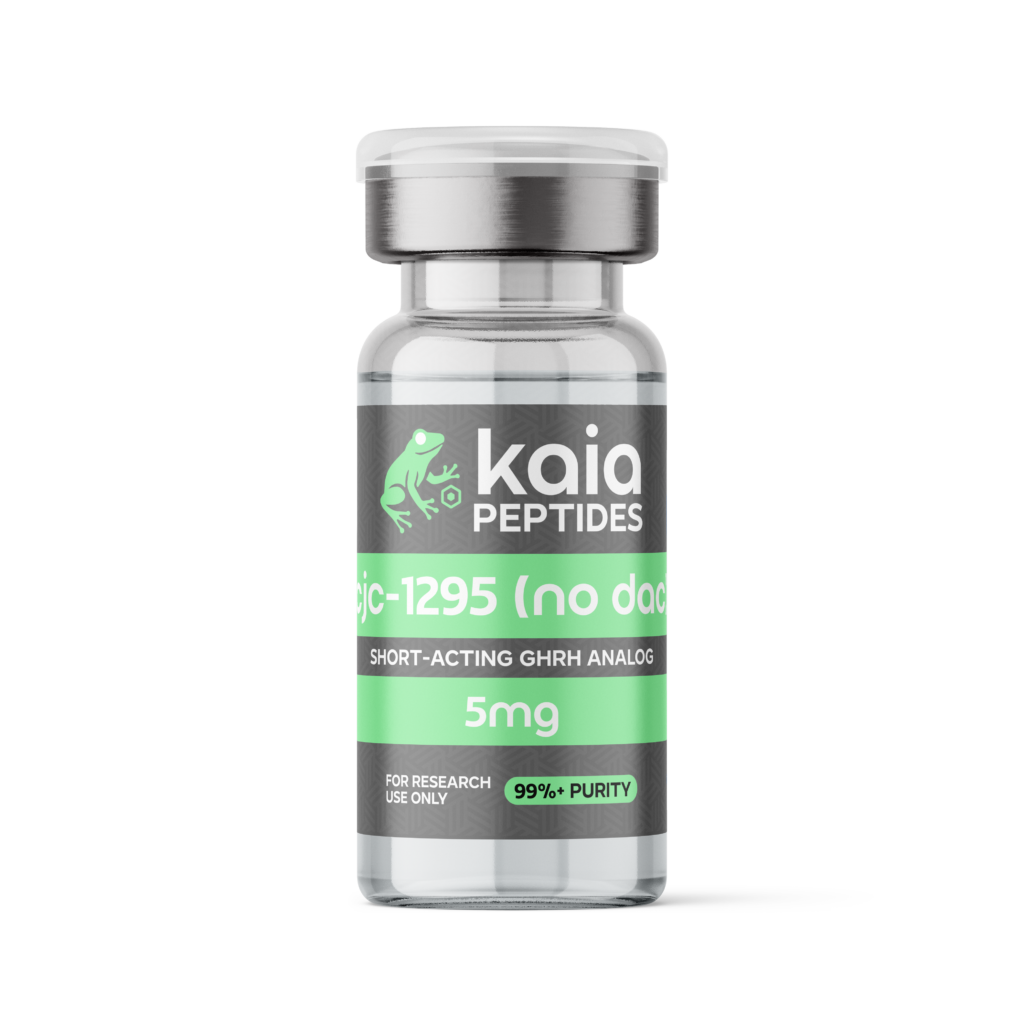
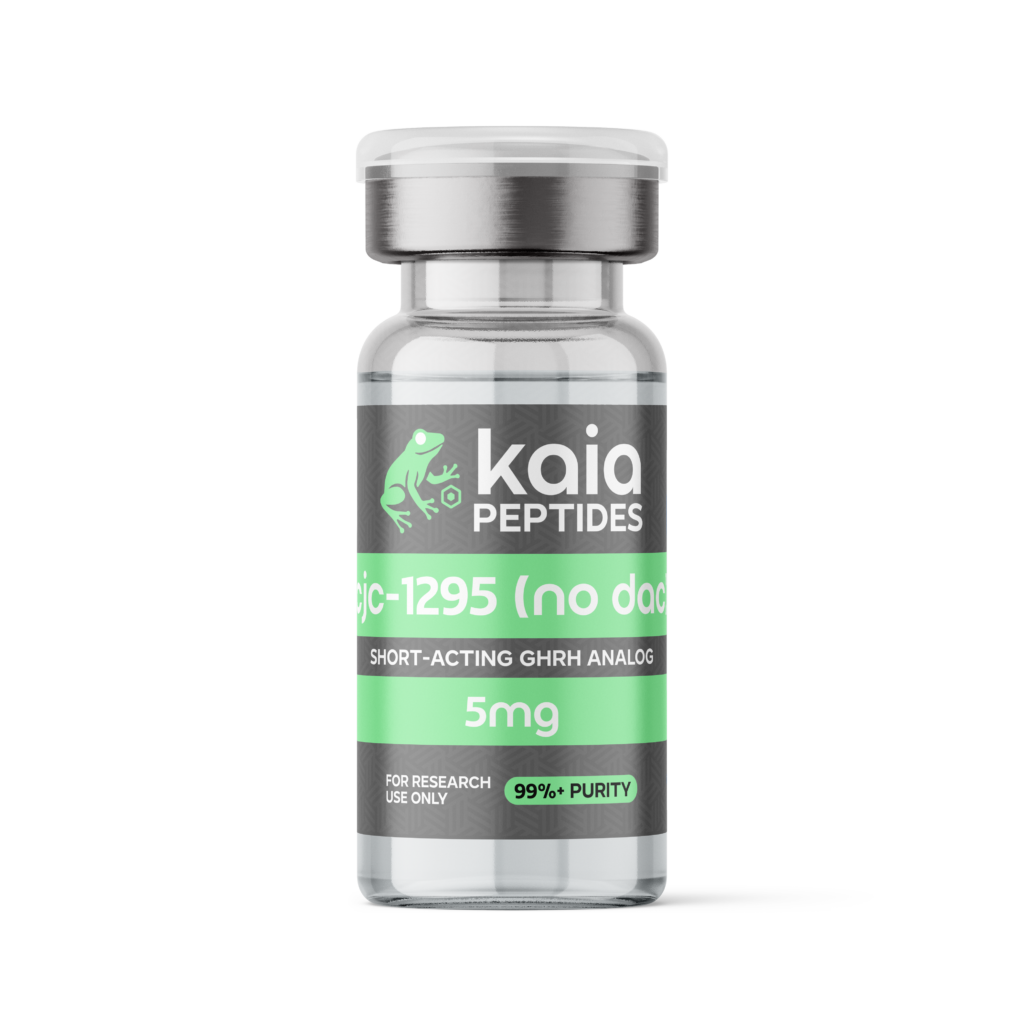
CJC-1295 (No DAC) — 5mg
GHRH Analog – GH Pulse Modeling, IGF-1 Pathway Observation & Circadian Signal Research
For laboratory research use only. Not for human or animal use. These products have not been evaluated by the U.S. Food and Drug Administration (FDA) and are not intended to diagnose, treat, cure, or prevent any disease.
What Is CJC-1295 (No Dac)?
CJC-1295 (No DAC) is a short-acting Growth Hormone–Releasing Hormone (GHRH) analog commonly used in laboratory research to study:
-
Naturalistic GH pulsatile release
-
IGF-1 pathway behavior
-
Tissue-model repair signaling
-
Circadian/ sleep-phase GH cycles
-
Metabolic-signal coordination
Because it lacks the DAC (Drug Affinity Complex) attachment, this version of CJC-1295 clears more quickly — allowing researchers to examine clean, short-duration GH pulses that closely mimic natural rhythmic patterns in controlled experimental environments.
Understanding CJC-1295 (No DAC) — A Metaphorical Research Analogy
To illustrate how CJC-1295 (No DAC) functions in research settings, imagine a large workshop model used by scientists to represent biological systems.
During the “day cycle,” this workshop:
-
Accumulates simulated wear
-
Experiences slowed performance
-
Shows strain in certain components
-
Builds up pending “repair tasks”
In most biological models, the primary repair cycle initiates during the “night shift,” when GH pulses typically peak.
But in some experiments, researchers observe:
Introducing CJC-1295 (No DAC) allows scientists to study how initiating a clean GH pulse influences these downstream pathways.
• CJC Sends the Signal (GH-Pulse Initiation)
In the analogy, CJC walks into the workshop’s control room and instructs:
“Begin the repair sequence.”
This represents its role in triggering a GH pulse, allowing researchers to measure:
• Setting the Tempo (Short-Acting, Rhythmic Pulses)
Because this version of CJC is No DAC, it does not linger or accumulate.
Researchers value this for studying:
-
Clean, natural pulse curves
-
Controlled signal onset and decay
-
Youth-like GH rhythm simulations
-
Reduced confounding from prolonged activity
It acts like a precise metronome guiding experimental GH signaling.
• Supporting Downstream Pathways (IGF-1 Research)
Once GH is released, researchers often track:
In the metaphor, the workshop’s crew receives new tools and better instructions — symbolizing improved signaling efficiency in controlled laboratory conditions.
• Night-Shift Signaling Studies (Sleep-Phase GH Research)
CJC-1295 (No DAC) is widely used to study:
-
Nocturnal GH-pulse timing
-
Circadian repair-model activity
-
Sleep-phase tissue-response simulations
-
Overnight metabolic-signal regulation
The analogy: the repair crew works under better lighting with more coordinated timing.
Combined Research Perspective
With CJC-1295 (No DAC), laboratories can study:
-
Naturalistic GH-pulse modeling
-
Short vs. extended signaling differences
-
IGF-1 cascade behavior
-
Circadian timing effects
-
Tissue-repair model responses
-
Recovery-pattern mapping
The workshop analogy helps illustrate CJC’s role as a precise GH-pulse initiator in experimental systems.
For Research Use Only.
Not for human consumption. Not for medical, therapeutic, or veterinary use.
Descriptions are for scientific, laboratory, and educational reference only.