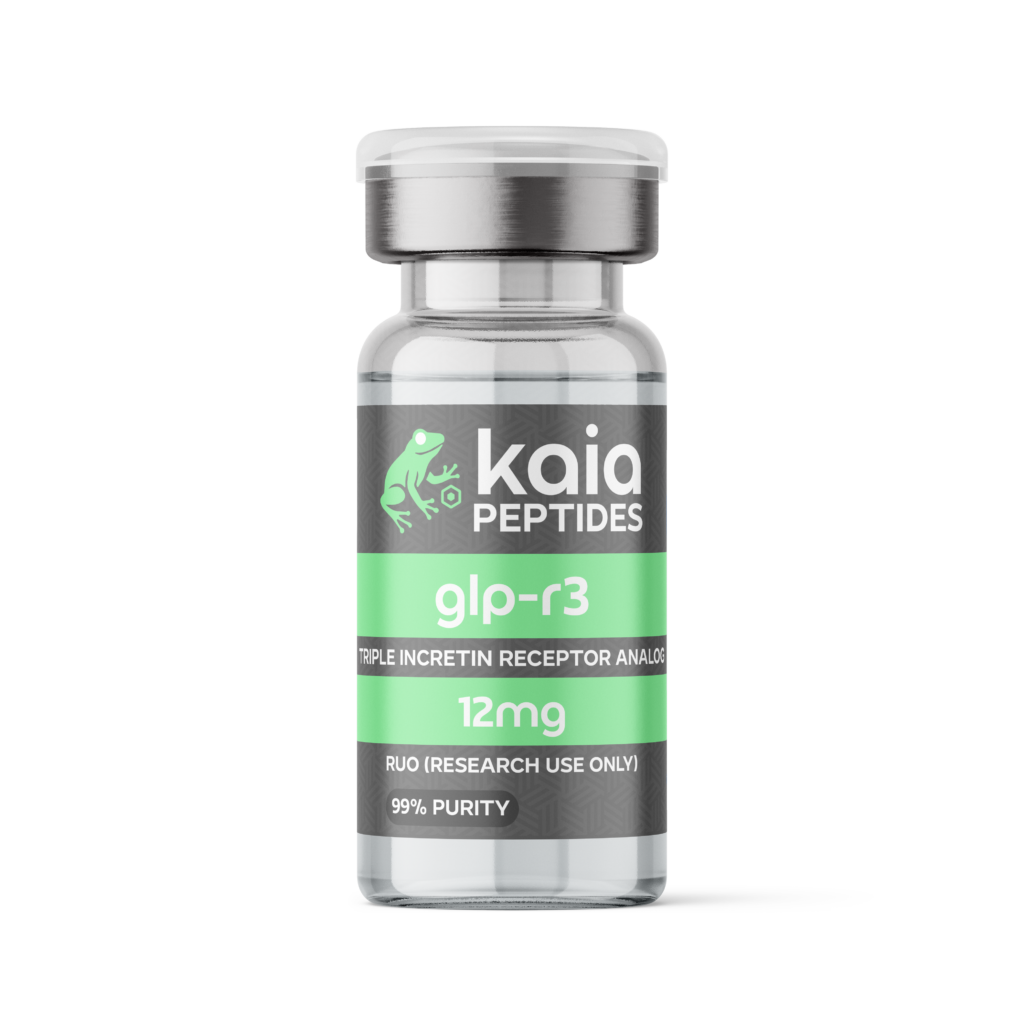
Retatrutide

Price range: $ 200 through $ 700

Quantity

Product Discription

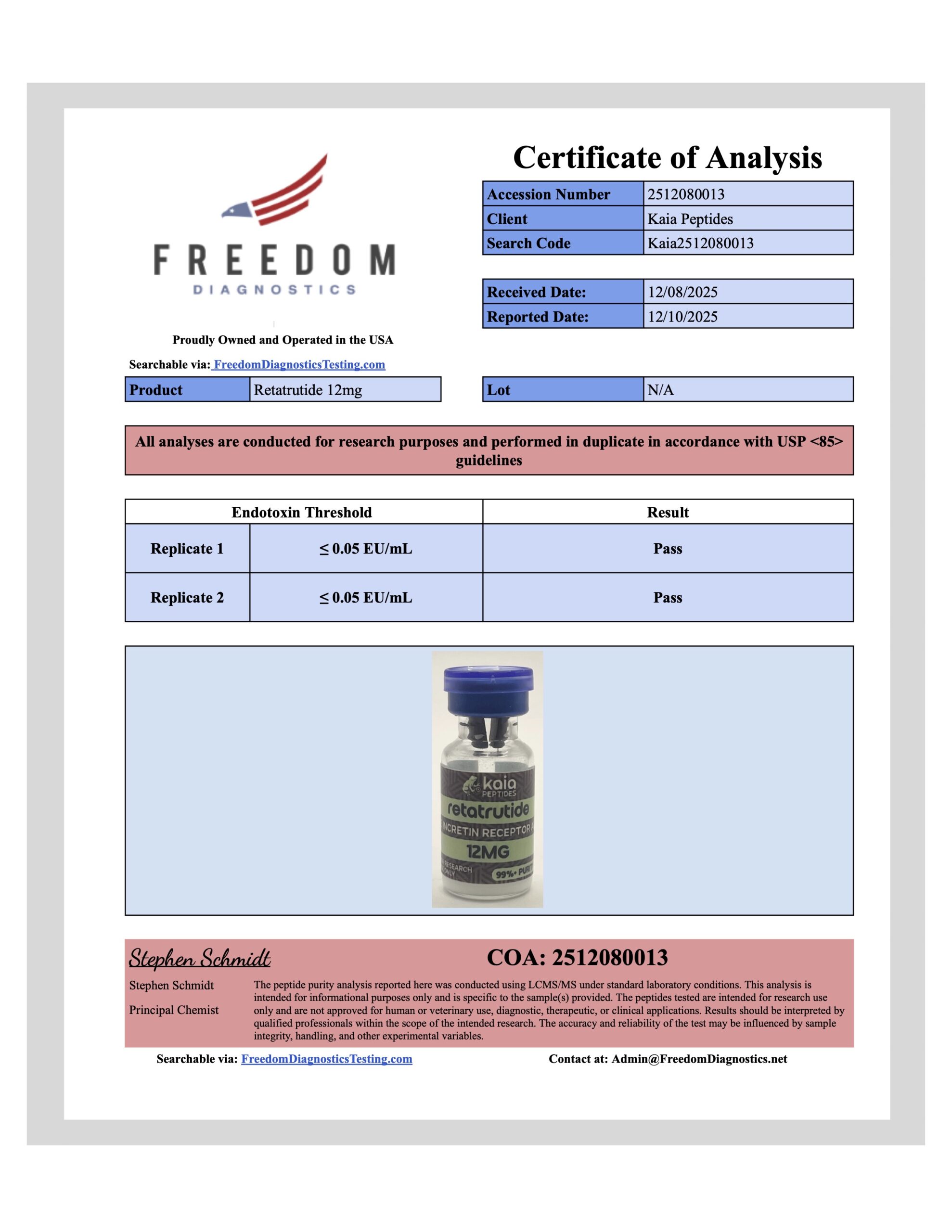
Retatrutide (12mg)

Triple-Action Metabolic Peptide – Appetite, Blood Sugar & Fat-Burning Pathways

What It Is
Retatrutide is a next-generation triple-agonist peptide researched for its impact on metabolic health, appetite regulation, energy balance, and body-composition support. It targets three
major metabolic receptors simultaneously — GLP-1, GIP, and glucagon receptors — giving it a broader and stronger metabolic profile than single-pathway peptides.

Understanding Retatrutide — A Metaphorical Story
Imagine your body as an enormous, high-tech train system.
This train represents your metabolism, constantly moving fuel (food) through the body and
deciding:
● How much energy you burn
● How much you store
● How fast your engine runs
● How often you feel hungry
● How clearly the signals flow

Most people have a problem:
Their train is running with broken signals, slow engines, and overloaded cargo cars.
This leads to:
● Excess fuel storage
● Constant hunger
● Low energy
● Slower fat-burning
● Poor metabolic efficiency
Now imagine one engineer hops aboard to help. That’s a GLP-1 agonist.
But Retatrutide is different.
It doesn’t send one engineer.
It sends three.
Three elite specialists who work together to reset the entire railway system.

Engineer #1 — The Signal Controller (GLP-1 Pathway)
This engineer fixes the signals that control:
● Hunger
● Satiety
● Cravings
● Digestive rate
Once repaired, the train stops overloading with excess fuel and starts running more efficiently.

Engineer #2 — The Fuel Manager (GIP Pathway)
This one optimizes how fuel is used, not just how much comes on board.
● Improves insulin signaling in research models
● Helps convert fuel into usable energy
● Reduces unnecessary storage
If GLP-1 fixes the appetite signals…
GIP fixes the way the body responds to the fuel you do eat.

Engineer #3 — The Engine Modulator (Glucagon Pathway)

This engineer goes straight to the engine room.
He turns on the systems that support:
● Fat-burning
● Energy expenditure
● Metabolic activation
He makes the train lighter, faster, cleaner, and more efficient.
The Result: A Fully Upgraded Metabolic Railway
With all three engineers working together:
● The train eats less fuel
● Uses fuel more intelligently
● Burns off stored energy
● Runs faster and cleaner
● Becomes more efficient every day
This is the simplest way to understand how Retatrutide’s triple-pathway activation supports
metabolic balance, appetite regulation, and body-composition changes in research models.

Explore

Discover Our Range of Peptide Solutions

ELEVATE

$ 135

Add to cart

WOLVERINE

$ 125

Add to cart

GLOW

$ 175

Add to cart

Tesamorelin

$ 155

Add to cart

PULSE

$ 175

Add to cart

Sermorelin Acetate

$ 110

Add to cart

KPV

$ 100

Add to cart

Cagrilintide

$ 125

Select options This product has multiple variants. The options may be chosen on the product page

KLOW

$ 185

Add to cart

CJC-1295 (No DAC)

$ 100

Add to cart

AOD 9604

$ 105

Add to cart

SS-31

$ 250

Add to cart

Epitalone

$ 95

Add to cart

Semax

$ 175

Add to cart

Retatrutide

Price range: $ 200 through $ 700

Select options This product has multiple variants. The options may be chosen on the product page

NAD+

Price range: $ 100 through $ 200

Select options This product has multiple variants. The options may be chosen on the product page

FAQs

Find answers to your most pressing questions about peptide categories and their usage.

 
What is Retatrutide? +
Retatrutide is an experimental peptide studied as a triple agonist — interacting with GLP-1, GIP, and glucagon receptors in research models. Researchers often describe it as a “three-key molecule” that fits into three different metabolic locks.
Why is Retatrutide attracting scientific interest? +
Because it targets multiple metabolic pathways at once, Retatrutide is being studied for its impact on glucose regulation, energy expenditure, and appetite signaling in preclinical settings. Think of it as exploring how a single conductor can lead three different orchestras at the same time.
How does Retatrutide differ from peptides like Semaglutide? +
Semaglutide activates only GLP-1 receptors. Retatrutide engages GLP-1, GIP, AND glucagon receptors. It’s like comparing a single-gear bicycle (GLP-1 only) to a multi-gear system designed to shift across several terrains.
What do GLP-1, GIP, and glucagon pathways do? +
In research models: ● GLP-1 affects appetite signals and glucose regulation ● GIP is tied to insulin response and metabolic flexibility ● Glucagon influences energy expenditure and fat utilization Together, they act like three dials on the same metabolic control panel.
Why is Retatrutide sometimes called a “triple agonist”? +
Because it interacts with three receptors simultaneously, researchers use the term “triple agonist” to describe its mechanism. It’s similar to how a universal remote controls multiple devices at once.
What does research suggest about Retatrutide and metabolic efficiency? +
Animal studies show Retatrutide may influence body weight, energy expenditure, and glucose regulation. Scientists study it like examining how upgrading both the fuel system and the engine might change a car’s performance. (All findings refer strictly to preclinical research.)
Why is glucagon activation included? Doesn’t glucagon raise blood sugar? +
In isolation, glucagon elevates glucose — but in a multi-agonist framework, it may help increase metabolic output and fat utilization. Researchers examine how the combination behaves like balancing levers on a system rather than pulling just one lever alone.
How does Retatrutide compare to Tirzepatide (a dual agonist)? +
Tirzepatide stimulates GLP-1 and GIP. Retatrutide stimulates GLP-1, GIP, AND glucagon. Researchers compare the two like upgrading from a dual-engine aircraft to a tri-engine model — more complexity, more variables, more potential to study.
Is Retatrutide considered safe in research environments? +
Early animal data shows a favorable profile at studied doses, but Retatrutide is not FDA-approved, still experimental, and not intended for human use. Kaia provides it for research-only applications.
Why does Retatrutide often cause “potent” effects in studies? +
Because it targets multiple pathways at once, triple agonists can behave more forcefully in preclinical work — similar to how combining three amplifiers creates a louder, more noticeable signal than using one.
How should Retatrutide be stored for laboratory research? +
Retatrutide should be stored in a cool, dry, stable environment. Freezing is typically preferred for long-term stability. Peptides are like delicate microchips — the colder and darker the storage, the longer they retain integrity.
Is Retatrutide legal to purchase for research? +
Yes. Retatrutide is allowed for laboratory research use under U.S. standards, as long as it is not sold for human consumption, medical use, or veterinary use. Kaia complies fully with research-use-only labeling and distribution.