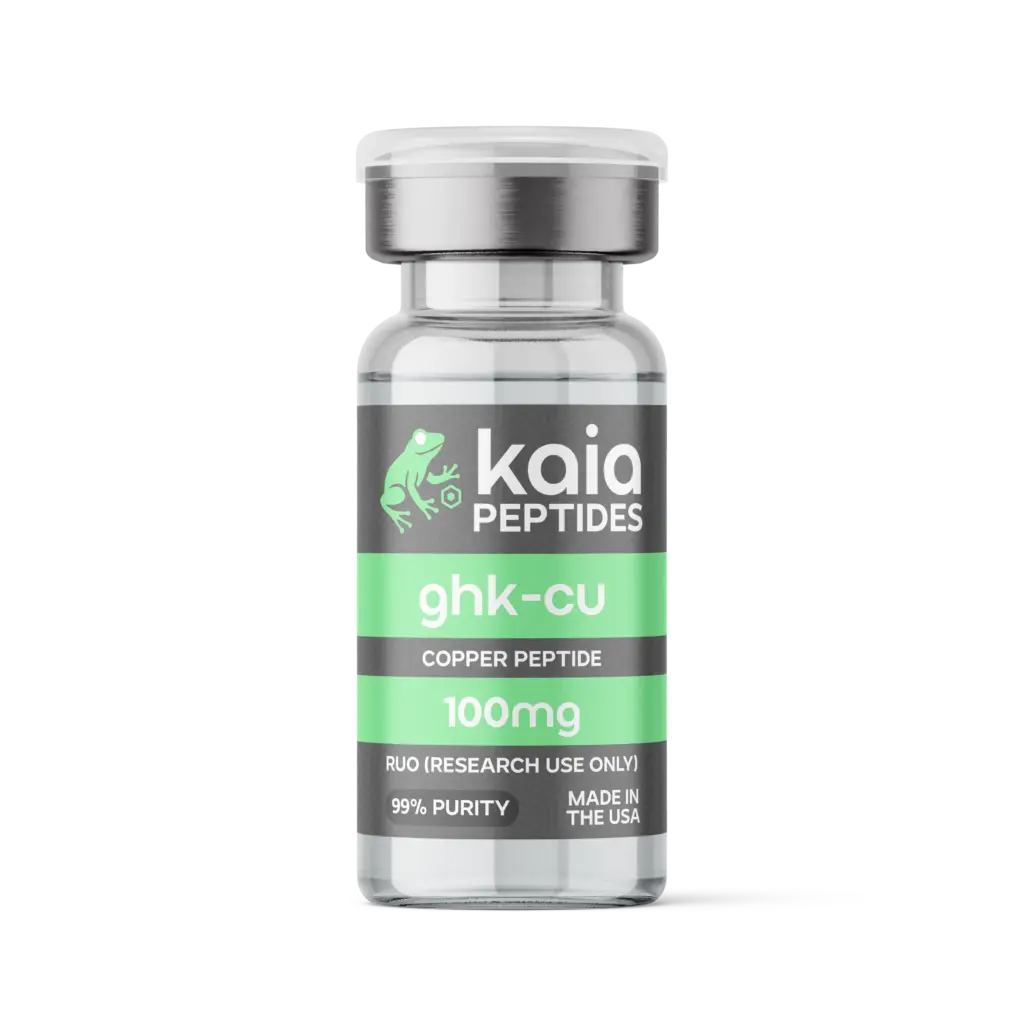
GHK-Cu (100mg)
Copper Tripeptide – Collagen, Skin Repair, Cellular Renewal & Anti-Inflammation
What It Is
GHK-Cu is a naturally occurring copper-binding peptide found in human plasma, saliva, and tissues. It is widely researched for its ability to:
● Support collagen + elastin synthesis
● Promote wound repair
● Improve skin structure + hydration
● Reduce inflammation + oxidative stress
● Activate youth-linked gene expression
● Enhance hair and tissue regeneration
GHK-Cu is one of the most studied peptides for skin health, cosmetic rejuvenation, and cellular repair.
Understanding GHK-Cu — A Metaphorical Story
Imagine your skin and tissues as a giant canvas — a beautiful painting made of collagen, elastin, and living color.
Over time:
● The paint cracks (fine lines)
● Colors fade (loss of vibrance)
● Brush strokes blur (texture changes)
● Dust accumulates (inflammation + damage)
Most paintings age slowly and lose their glow.
But then a master restorer arrives — one who specializes in restoring art to its original brilliance.
That restorer is GHK-Cu.
• GHK-Cu Restores the Canvas (collagen + elastin synthesis)
It brings fresh pigments and new brushes, rebuilding the texture of the canvas from the inside out.
Fine lines = smoothed.
Cracks = filled.
Structure = strengthened.
• It Cleans the Dust (anti-inflammatory + antioxidant effects)
The restorer gently removes debris and dullness so the artwork can breathe and shine again.
Less irritation.
Less oxidative stress.
More clarity.
• It Repaints Faded Areas (skin regeneration + wound repair)
Any part of the painting that faded or chipped is retouched with precision.
This is how GHK-Cu supports:
● Wound healing
● Skin firmness
● Hydration
● Even tone
• It Restores Lighting in the Gallery (gene expression modulation)
When the room’s lighting is dim, even a beautiful painting looks lifeless.
GHK-Cu turns the lights back on by activating youth-linked genes associated with:
● Repair
● Growth
● Cellular regeneration
The whole scene becomes vibrant and alive again.